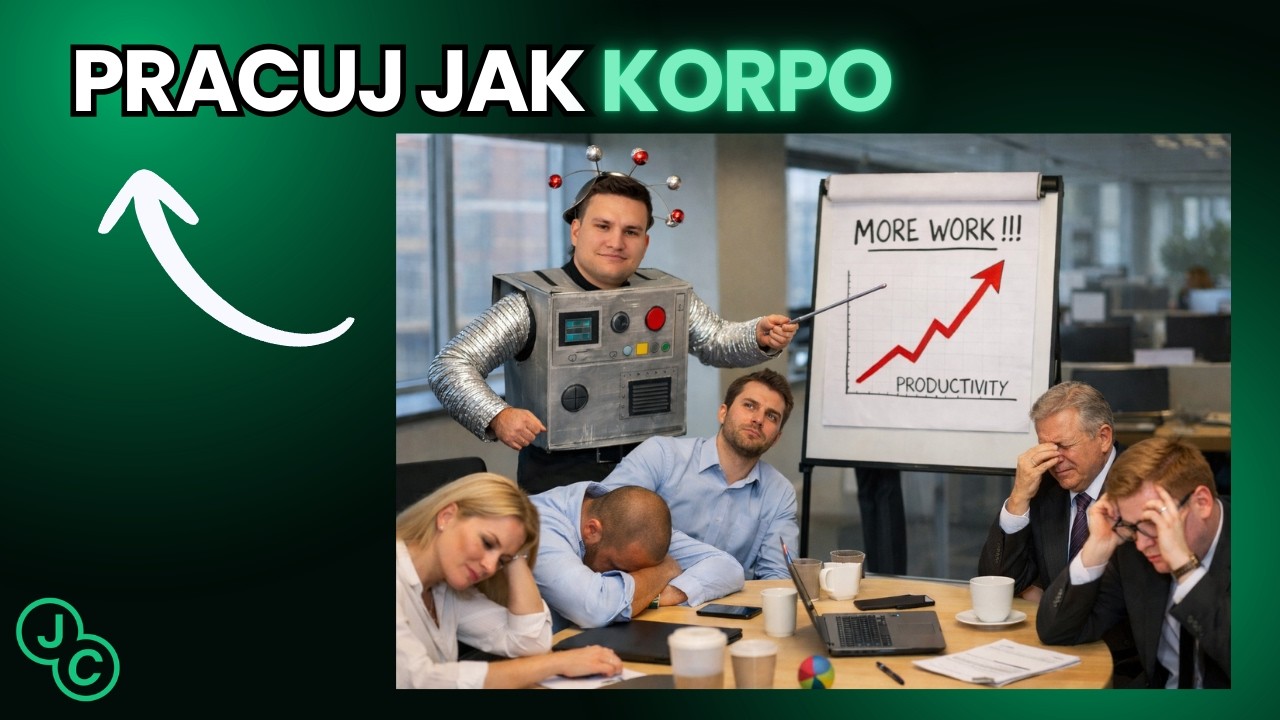
Monday, 8:30 AM. A salesperson opens Excel with a price list. It's the March version, but they're not sure if anyone changed anything. They calculate a variant. They copy it to Word. They format the price table. They adjust the logo. They export to PDF. They check it. They fix a typo. They export again. 10:15 AM — they send it by email. The client receives the file. To review sometime. Or to the trash.
In turn, 10:30 – new inquiry. Excel. Word. PDF. 12:00 – break. Furthermore, in the afternoon – the same. In the evening, the salesperson closes the laptop. As a result, zero customer calls. Therefore, one question: who is the salesperson here, and who is the calculator?
Namely, if this scene sounds familiar, this article is about you. Not about an abstract „bidding problem.” About you. About your Excel. About your PDF bid, which the client opens on their phone with an 8pt font and closes after 3 seconds.
First and foremost, offer chaos is not „bad management.” It's an invisible cost that silently accumulates in every Excel spreadsheet, every discarded PDF, and every forgotten lead. Furthermore, no one counts it because there isn't a single invoice „for chaos.” Therefore, this article describes 7 symptoms that will help you recognize if your company has offer chaos. Each symptom is a real-life scenario, not a theory.
Do you recognize yourself? Let's check together how much it costs you. 30 minutes of conversation. Diagnosis of your process + cost range for chaos. No obligation. | Schedule a diagnosis |
Offer Chaos in a Manufacturing Company: Your Salesperson is a Blocker, Not a Helper
B2B clients in 2026 won't need your salesperson. They need a quote in 4 minutes. Latest Gartner data: 67 percent of B2B buyers would rather buy WITHOUT contact from a salesperson. Meanwhile, your salesperson sends a quote in 3-7 days. Via PDF. To the trash.
The problem isn't that your salespeople are bad. The problem is that your company's quoting process forces them to be calculators instead of salespeople. Specifically, the median response time for a B2B inquiry (sample of 939 companies) is 47 hours. Meanwhile, a Harvard Business Review study confirms: responding in under 5 minutes gives you a 21 times greater chance of qualifying a lead. Furthermore, 78 percent of customers buy from the company that responds first.
Therefore, if your company responds in days, and the competition responds in hours, you don't have a problem with salespeople. You have bid chaos. Here are 7 symptoms by which you will recognize it.
7 symptoms of offer chaos — see how many you recognize
Symptom 1: Two versions of the price list are circulating in the company
Specifically, salesperson A sends a quote from price list v3 (March). Salesperson B sends from v2 (January). The client receives two different prices for the same product. Consequently, they call the director. The director doesn't know which version is current.
Namely, research by Aberdeen and Nucleus Research shows that at the manual quoting level, the error rate for pricing is 15-30 percent. Each error means lost margin or lost customer trust. In turn, one error on a 50,000 PLN quote costs a company 2,000-5,000 PLN. Multiply that by 100 quotes and a 15 percent error rate, and you have 37,500 PLN burned annually on pricing mistakes alone.
Furthermore, the problem is exacerbated with each new trader. Two traders mean two versions of the price list. Five means five. Therefore, the faster the company grows, the faster the chaos grows. Paradox: success amplifies mess.
Symptom 2: Forgotten lead from Monday
So, a lead comes in Monday morning. It goes into Excel – row 347. But on Wednesday, the salesperson has 6 new inquiries. They forgot about the Monday one. Friday – the client bought from the competition. The salesperson doesn't even know they lost the deal.
This is not an anecdote. The median response time in B2B is 47 hours (sample size of 939 companies). Whereas 78 percent of customers buy from the company that responds first. Therefore, every lead not responded to within 4 hours is a deal given away to the competition for free.
Furthermore, in Excel, a lead is a row in a spreadsheet. There's no alert, reminder, or status. No one sees that row 347 hasn't had a follow-up since Monday. In contrast, in a CRM (even the cheapest one), a lead has a status, deadline, and is assigned to a salesperson. Essentially, the difference between Excel and a CRM is the difference between guessing and knowing. More about CRMs: CRM ranking for a manufacturing company.
Symptom 3: Nobody knows if the client opened the offer
So, a salesperson sends a PDF offer on Thursday. On Monday, they call: „Have you read the offer?” Client: „What offer?” Or the second variant: the client has read it, spent 12 minutes on the pricing section, and returned twice to compare the options. However, the salesperson doesn't know this because the PDF has no open tracking. A follow-up in the dark.
First of all, an offer without analytics is like talking through a wall. You're speaking, but you can't see the reaction. On the other hand, L1+ tools (Sellizer, PandaDoc, JSON Hub) show you: when the client opened it, how much time they spent, which section they returned to. Specifically, the difference between „calling blindly” and „calling because I see the client has read the pricing for the third time” is the difference between an amateur and a professional.
Furthermore, the lack of open tracking causes another problem. The salesperson doesn't know if the client has even seen the offer. Consequently, they call either too early (the client hasn't read it yet) or too late (the client read it a week ago and chose a competitor). Therefore, the timing of follow-ups at L0 is a gamble.
Symptom 4: Offer in 3-7 days, competition by the hour
The client sends an inquiry to three companies at 9:00 AM on Tuesday. Your company: a salesperson takes notes, calculates in Excel, formats in Word, PDF, email – the offer is sent on Friday. Competitor #2: they have a configurator on their website – the client configured a variant themselves and received the price at 9:15 AM. The third player: CRM auto-response plus a salesperson calls at 9:30 AM with a qualifying question.
Namely, company A will never know it lost the deal. Because the inquiry „expired” with the client before the offer arrived. HBR study: a response in less than 5 minutes = 100 times greater chance of conversion than after 30 minutes. That's why an offer in 3-7 days isn't „a slow response.” It's no response from the client's perspective.
Symptom 5: PDF on the phone = unreadable
Specifically, the client opens your offer on their phone. During a meeting with a competitor. As a result, the font is 8pt, the table overflows the screen, and the logo is cropped. Therefore, they close it. However, they open the competitor's offer – an interactive website, responsive, the pricing adapts, and the client can change parameters and see the price in real time.
The offer's UX is your brand's UX. PDF to the trash = amateur. Interactive website = professional. Furthermore, 67% of B2B buyers prefer a self-service experience (Gartner March 2026). However, a PDF from Word is not self-service. It's homework for the customer. More about interactive configurations: product configurator rankings 2026.
Symptom 6: Zero follow-up after 7 days
So the offer was sent. A week of silence. The salesperson waits for the client to get in touch. The client waits for the salesperson to get in touch. As a result, no one calls. After 14 days, the salesperson writes: „Good morning, I'm following up on the offer...” The client: „We've already chosen another company.”
First and foremost, at the L0-L1 level, follow-up depends solely on the salesperson's memory. The lack of event automation means: an offer is open, but no one knows; 7 days without a response, but no one sends a reminder. In contrast, at L3, the system reacts automatically: the client opened the offer for the third time, the salesperson receives an alert, and they call at the right moment instead of randomly. Details: 5 levels of quote automation maturity.
However, the worst-case scenario is a salesperson who writes „Good morning, I'm following up on the topic” two weeks after sending an offer. As a result, the client hears, „this company forgot about me.” Furthermore, statistics show that the optimal follow-up is 24-48 hours after the offer is opened, not after it's sent. Without tracking opens, you have no chance of hitting that window.
Symptom 7: Salesperson = calculator, not a salesperson
The most expensive of all. Salesforce's 2025 State of Sales report indicates that salespeople spend 60 percent of their time on administrative tasks: calculating variations, formatting proposals, copying data, sending emails, and manual follow-ups. Meanwhile, only 40 percent of their time is dedicated to what you pay them for – talking to clients.
Namely, for a team of 10 salespeople at 50 Polish zloty per hour, that's 316,800 Polish zloty annually spent on bid administration. Therefore, you don't have salespeople who are too expensive. You have too expensive calculators who could be selling.
So, if this 60 percent of a salesperson's time were redirected to customer conversations, a typical company could double the number of sales meetings without hiring anyone new. However, as long as salespeople are stuck in Excel, this won't happen. Furthermore, the longer a company remains at L0 (manual quoting), the harder it is to change habits. People get used to chaos and call it „our process.”.
Diagnostic: 7 questions — how many times do you answer „no”
Offer Chaos Checklist (Yes/No):
- Do you have one price list that all salespeople use?
- Does every lead get a response within 4 hours?
- Do you know when the client opened your offer (without asking them)?
- Can the client change the offer parameters themselves and see the new price?
- Do you have automatic follow-ups after 3/7/14 days without manually writing them?
- Is your offer clear and interactive on a phone?
- Do salespeople spend more time talking than formatting?
3+ times „no” = you have offer chaos. 5+ = your process costs you hundreds of thousands of zlotys annually.
How much does it cost you (specific numbers)
ANNUAL COST OF CHAOS · COMPANY OF 10 PEOPLE
~346,000 zlotys annually in hidden costs
Salesperson time for administration: 158,400 PLN/year lost (60% → 30% of time).
Lost deals 600,000 PLN/year in lost revenue because the competition responded faster.
Valuation errors 37,500 PLN/year loss from pricing errors alone.
Full ROI framework calculation for your company: how much does bid automation cost.
Specifically, 346,000 PLN per year is not an abstraction. That's a salesperson you could hire. Or a marketing campaign that could bring in 200 leads. Or a configurator that could handle customers 24/7 on its own. However, that money disappears quietly, in Excel, in formatting, in forgotten leads. That's why no one counts it, because you don't see a single invoice for „chaos.”.
Moreover, the chaotic offers are a worsening problem, not stabilizing. Furthermore, the company is growing, products are increasing, salespeople are increasing, the price list is becoming more complicated, and Excel is groaning under the strain. In turn, each new salesperson inherits the same bad habits and creates their own version of the price list. Namely, by the third year, the company has not just one Excel file, but five, plus three WhatsApp groups, plus a folder of „last year's” offers, and no one knows which version is currently valid.
I was there (and yes, we left)
I'm not writing this from a „we know better” position. I'm writing because it was exactly the same for us. Meta Ads launched. Leads flowing in. To Excel. Columns, selections, notes with colors. Forgetting about leads. Losing notes. No reminders – clients don't show up for meetings because someone forgot to enter it. Offer? Hours of work. The client gets a PDF. Boring. Likely to be opened… eventually. That's why we built JSON Hub – one dashboard from lead to offer. An offer as a webpage, not a PDF to be tossed. Not „many companies have this problem.” We've been there. In the same place as you.
Well, as of today, leads have stopped disappearing, notes are public, and it's clear as day who changed what. Every week, the team goes through lost calls and knows why they didn't pan out. On the other hand, presenting the offer as a webpage (not a PDF) creates a „wow effect” for our end clients—a direct quote from one of them.
Furthermore, companies from very different industries are using the same system today: heat recovery and heat pumps, RES and photovoltaics, construction (roofs, garages, gates, welding), HVAC and air conditioning installation, product personalization (mugs, water bottles), and industrial workwear laundry. Namely, the common denominator is not the industry. The common denominator is frustration when Excel is no longer sufficient and PDF ends up in the trash. Therefore, if you recognize yourself in this frustration, it's not a matter of „if” you will change the process. It's a matter of „when.”.
What's next - three steps out of chaos
Namely, the offer chaos does not disappear on its own. However, it disappears in three steps.
Step 1: Diagnose the level. Read 5 levels of quote automation maturity. Determine if you are at L0 (Excel), L1 (template PDF), L2 (CRM without configurator), or higher. Specifically, the diagnosis takes 30 seconds.
Step 2: Calculate how much it costs you. Read how much does bid automation cost. Plug your numbers into the ROI framework. Show it to the board. As a result, the decision becomes obvious.
Step 3: Choose the upgrade path. For a company with a customizable product (heat recovery, renewables, HVAC, construction, machinery, custom furniture), the fastest path is a leap to L3—configurator plus event automation. JSON Hub for 500-2500 PLN per month or a competitorCRM ranking, Configuration ranking) Additionally, implementation takes 2-4 weeks. ROI in 3 months.
And if you don't know where to start, write to us. 30 minutes of conversation. Process diagnosis, budget range, tool recommendation. Even if it's not JSON Hub.
OPTION 1 · PROCESS DIAGNOSIS
30 minutes, your 7 symptoms
We go through the checklist together. We determine the level (L0-L5), calculate the cost of chaos, and propose a path. No pitch deck.
OPTION 2 · SELF-DIAGNOSE
5 maturity levels + ROI calculation
Read the pillar on the 5 levels of automation. Determine your level, calculate ROI with a framework, and present it to management.