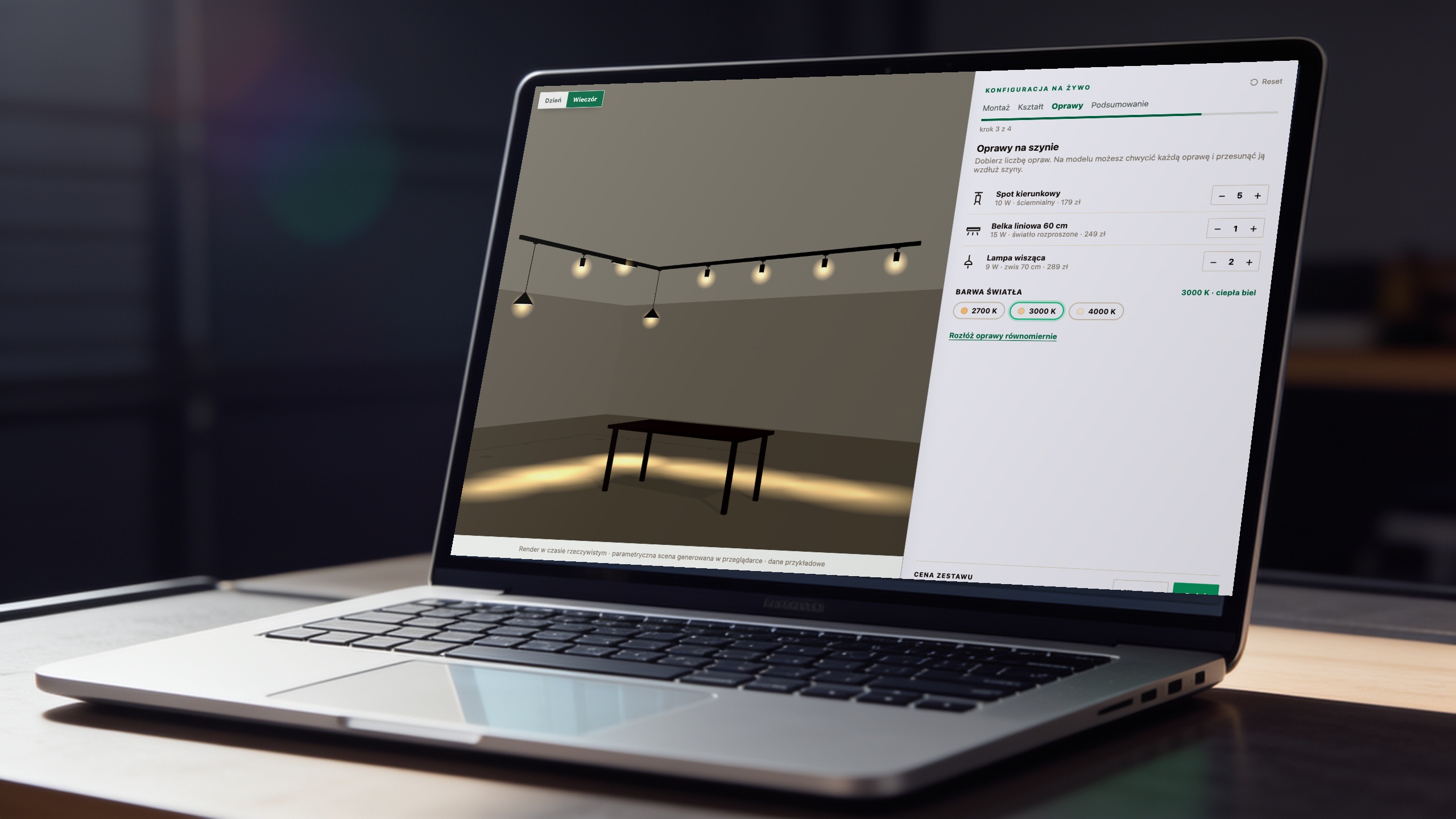
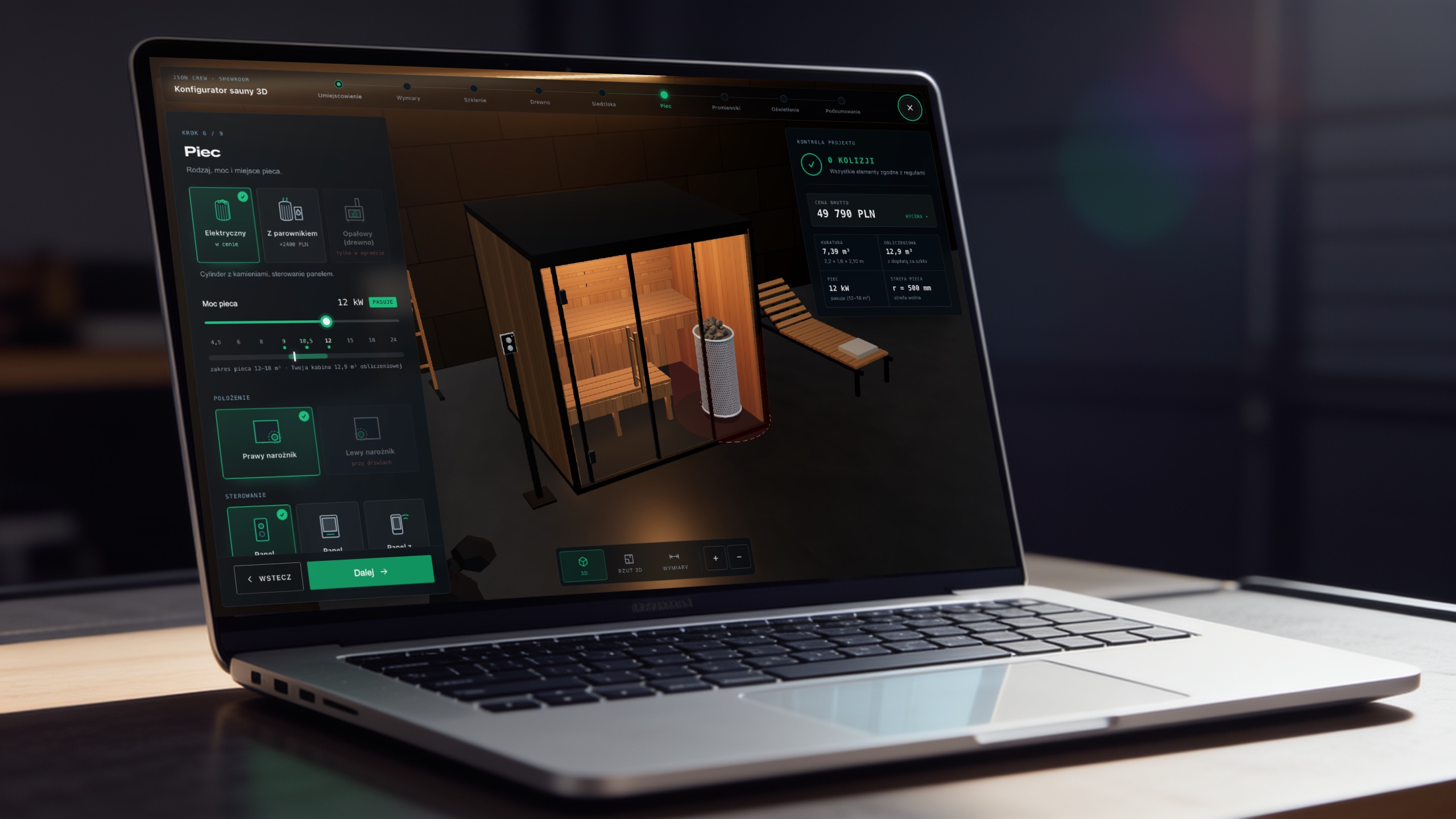
without installing an app
engine, wheels, wheel color, paint, spoiler
standard, silver, black, gunmetal, bronze
The amount is updated with every click
What a car configurator does—and what it can't replace
The automotive industry has its own realities: dealerships, financing, test drives, and regulations. The configurator streamlines some of these steps, while leaving others in the hands of the salesperson. Below is what it actually does—and what you shouldn’t expect from it.
The customer looks at five options on their phone in the evening instead of waiting for an email from the sales representative on Monday
The lead reaches the dealer with specific details (paint job + rims + drivetrain) instead of just asking, „Please send me a quote.”
You sell in several regions, and shipping, delivery, or language versions can affect the price by several thousand
Do you want to respond to the growing search trend for „configurator [brand]”? Customers already expect this path.
A standalone MVP configurator for wheels, finishes, or packages—as the first step toward a full 3D scene
Click-through analysis answers the question of which ad impressions actually result in a search query, rather than just a click on the ad
3D car configurator for dealers, importers, and vehicle body builders: where to start
This guide is for companies that aren’t automotive giants but are considering a 3D car configurator on their own website: multi-brand dealers, importers, and manufacturers of specialty vehicle bodies and accessories. We answer the questions that come up before the quote: which scope to choose, where to get the model, how to show the price, and what should happen with the finished configuration.
A full vehicle, a single model, or a wheel module?
The first decision is about scope, not technology. In the demo above, the customer changes the drivetrain, wheels, wheel color, paint, and spoiler on a single GLB model, and the price updates with every click. That scope is enough to test whether your customers use this path at all.
Expanding to more models and model years only makes sense once data from real inquiries supports it. Below are three typical starting points.
| Scope | What it includes | Estimated implementation time |
|---|---|---|
| Wheel or trim configurator (MVP) | size, color, pattern, price, contact form | 4–6 weeks |
| Vehicle with a single model | 3D model, 3 finishes, dynamic pricing | 8–10 weeks |
| Full vehicle configurator | 5–7 configuration areas, compatibility rules, integrations, several model years | 4–6 months |
We set a specific timeline after auditing the 3D assets, because they, not the interface itself, are what most often determine the timeline.
A configurator assumes the customer builds the product from options and the company can then deliver it. If you mainly sell cars off the lot or used vehicles, where each unit already has fixed equipment, a good inventory search with filters will serve you better than a 3D car configurator.
The same applies when there are few options and the price barely changes. In that case, a few photos of the variants and a form are enough, and the budget is better spent on faster inquiry handling and better trim descriptions. A configurator starts to pay off where there are many combinations and the customer genuinely chooses between them.
Where to get a 3D model if you don't have one
Most often, the model exists at the manufacturer’s design office or with the brand’s distributor. Dealers and importers need to request it and check their brand agreement to see whether they may use it publicly on their own website. This question is worth asking before the quote, because the entire timeline depends on the answer.
A specialty body builder usually faces the opposite situation: they have an accurate CAD model of their body but not of the chassis itself. The production model is too heavy for the browser, so it has to be converted to glTF/GLB and simplified. If there is no model at all, the options are modeling from scratch or a 2D version based on photos and renders that can later be upgraded to 3D.
How to show the price without overpromising
The configurator shows the price instantly, so customers will see any mistake in your price list right away. Before launch, you need to decide whether to show the list price, a “starting at” price, or a range. Dealers who negotiate discounts individually usually choose the list price with a note that the final offer will be prepared by the showroom.
- Determine the source of prices (ERP, DMS, a spreadsheet, or a CMS panel) and the person who keeps them up to date.
- Separate option surcharges from the base price so the customer can see what drives the total up.
- State clearly what the price doesn't include: registration, delivery, financing.
- Decide whether to show net prices (fleet and B2B customers) or gross prices (individual customers), or offer a toggle.
What happens to the configuration after clicking “send”
A configurator won't sell a car if the finished configuration lands in a generic inbox and sits there until Monday. The lead should include the full spec (paint, wheels, drivetrain, package), the price, the traffic source, and contact details. With multiple dealerships, you also need an assignment rule: by state, ZIP code, or the location chosen by the customer.
The simplest version sends an email to a sales rep. A more complete one creates a customer record in the CRM and, for a body builder, passes the configuration on to production costing. Each integration is a separate scope of work, and its timeline depends on the quality of the API on the other side.
It's also worth thinking about customers who aren't ready to get in touch yet. A link to a saved configuration or a PDF summary lets them come back to their choice a few days later or show it to family. When they return and send an inquiry, the sales rep sees the same configuration the customer was looking at at home, without retyping it from an email.
How to check whether a 3D car configurator pays for itself
The number of visits alone says little. What matters more is how many sessions reach the summary, at which step customers drop off, and how many configurations end in an inquiry. Step analytics also show which finishes actually lead to contact and which are just browsed.
The second indicator is how the conversation in the showroom goes. If the sales rep starts from a specific configuration instead of asking “What are you looking for?”, the conversation is shorter and closer to a decision. It's worth tagging these leads in the CRM from day one, so that after a few months you have hard evidence for or against expanding the tool.
What to prepare before talking to a vendor
- The list of models and trims to include in the configurator in the first phase.
- Available 3D files with information on format, author, and usage rights.
- An option price list with “requires” and “excludes” rules, e.g. larger wheels only with the sport package.
- The name of the system the lead should go to: a CRM, a DMS, or a specific showroom's inbox.
- A person on your side who approves prices, content, and subsequent changes.
With a package like this, discovery takes less time and the estimate is based on real assets, not assumptions. If you don't have some of this data yet, that's useful information too: it usually means it's better to start with a smaller module.
You can check an approximate budget range for your own scope in the configurator cost estimator, and we describe the full scope of our services on the page online configurators and presentations, and we cover passing leads to CRM and DMS in our offer ERP and CRM integrations.